

What is changing in Food packaging ? Seven trends to watch
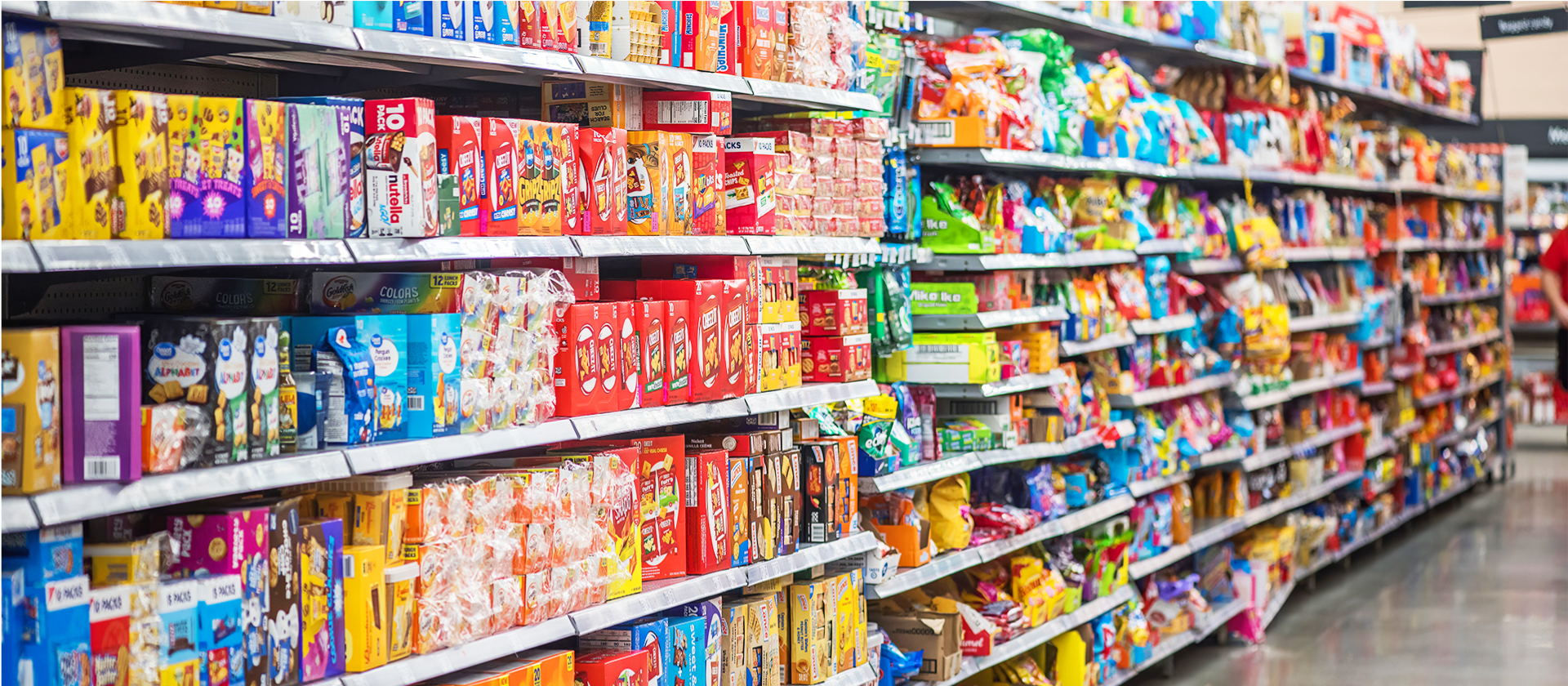
Food manufacturers are facing a market where growth comes with new expectations. From evolving consumption occasions to product innovation and changing packaging requirements, the opportunity is expanding, but so is the complexity behind every pack.
Seven key trends help explain where the market is heading and, more importantly, what that shift could mean for food packaging machinery, food packaging automation and packaging operations.
Food packaging machinery: why value is growing faster than volume
Growth in Food is taking on a different shape. and not at the same pace everywhere. Mature, diversified markets such as Europe are combining scale with greater packaging-format variety and increasing sustainability pressure, while China and India remain major volume pools. At the same time, regions such as South-East Asia & Oceania, the Middle East, Africa, Turkey and Latin America add a different growth dynamic (source: European Commission – Agriculture and food data and analysis; UNIDO – World Manufacturing Production and Trade).
Consumers are looking for more choice, convenience, premium experiences and products that fit different occasions. For manufacturers, that means opportunity, but also a much more demanding production environment. Food packaging machinery needs to accommodate more SKUs, materials and formats while keeping production efficient, reliable and increasingly sustainable.
The numbers make this shift even clearer. According to Euromonitor, the combined Baked Goods, Biscuits, Bars, Snacks and Confectionery market is expected to grow from €739 billion in 2025 to nearly €898 billion by 2030, a +4.0% CAGR.
In other words, value is growing much faster than volume. And that changes the packaging conversation.
The SKU boom is testing food packaging machinery
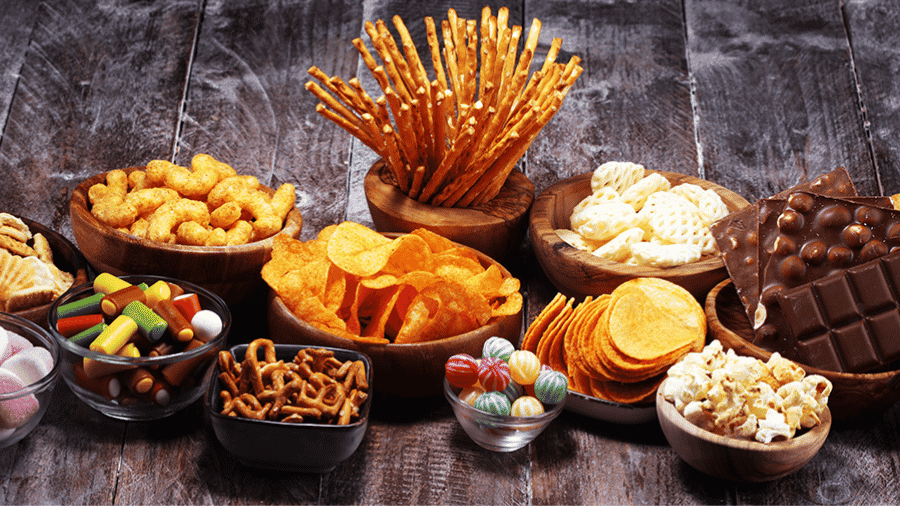
Food growth is spread across very different categories, and some of the fastest-growing segments illustrate just how diverse the opportunity is (source: Mintel – Global Food and Drink Trends 2025).
Euromonitor identifies dynamic segments ranging from protein and energy bars (+6.0% CAGR) and packaged flat bread (+11.0% CAGR) to meat snacks (+4.9% CAGR), gummies & jellies (+4.5% CAGR) and power mints (+4.4% CAGR).
And every new product can bring new packaging requirements.
Different shapes. Different dimensions. Different coatings, portion sizes, and fragility levels. Different pack architectures.
A successful product innovation pipeline therefore creates an important operational question: can the packaging line absorb all this variation efficiently? For manufacturers, food packaging machinery must balance consumer appeal, convenience, product protection, format variety and manufacturing efficiency. So, it’s necessary to manage product and format variation without allowing complexity to turn into unnecessary downtime or quality losses.
Food packaging: when every pack has to work harder
Premium products, innovation and differentiation are creating new opportunities across food categories.
Confectionery is expected to grow from €221 billion in 2025 to €266 billion by 2030, while Savory Snacks are projected to rise from €222 billion to €268 billion. Baked Goods, meanwhile, represent €178 billion in 2025 and are expected to grow at a +4.7% CAGR through 2030, according to Euromonitor.
But greater value also raises expectations around the pack.
A pack is no longer just there to contain and protect a product. In Food packaging, it can support differentiation, quality perception and the overall product experience. (source: Mintel – Global Food and Drink Trends 2025)
On the production floor, that translates into:
- More premium and differentiated formats
- Greater attention to pack quality and consistency
- More complexity to manage without sacrificing efficiency
So, every new product can bring new requirements for food packaging machinery.
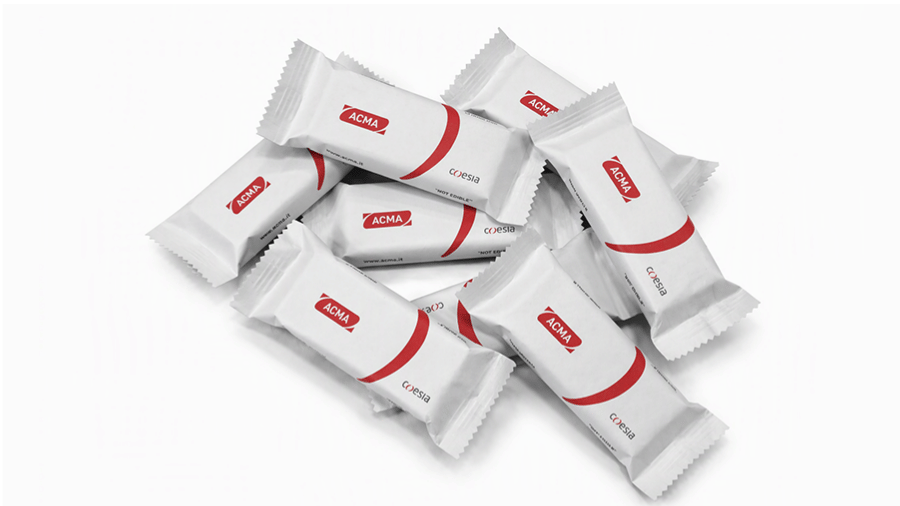
ACMA’s fold wrapping machinery portfolio reflects this need for greater variety. Across machines such as the CW 1400, CW 800, CW 600, and JW 700, the portfolio supports multiple formats and wrapping styles, giving manufacturers the flexibility to respond to different product shapes while guaranteeing high pack quality and production efficiency.
New materials bring new questions for food packaging machinery
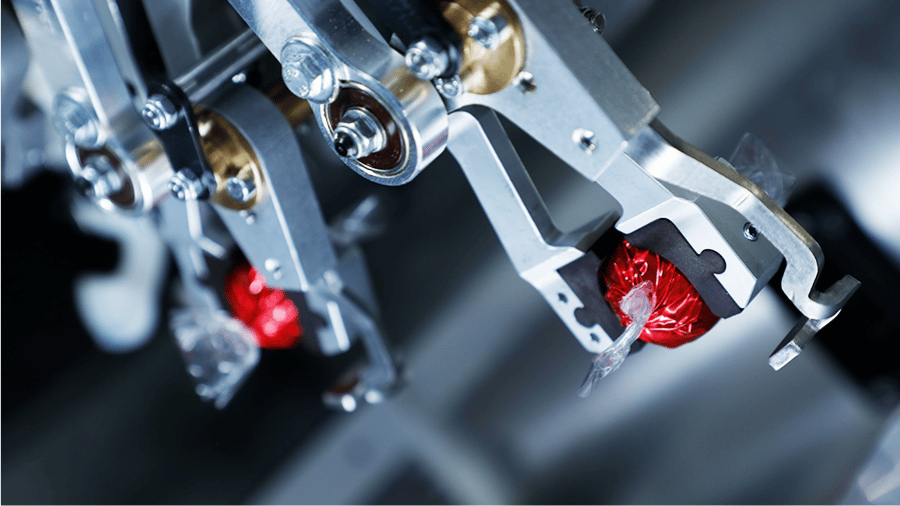
The transition toward sustainable packaging is more complex than replacing one material with another. New substrates can behave differently during forming, folding, sealing, and high-speed handling. At the same time, manufacturers still need to protect food safety, product quality, and shelf life.
In Europe, the regulatory landscape is evolving too. The source appendix points to the EU Packaging and Packaging Waste Regulation and FAO resources to contextualize the relationship between packaging reduction, food protection, food safety, shelf life and food-waste prevention (sources: European Commission – Packaging and Packaging Waste Regulation; FAO – Reduce, reuse, recycle: a mantra for food packaging).
So, the industrial question becomes: how will new materials perform on the line? Testing before industrial implementation can help answer it.
This is where ACMA Next makes the difference, supporting customers and partners testing next-generation materials while developing sustainable, digital solutions and tailored upgrades that extend machine lifespan.
Sustainability, in other words, needs to work both on new alternative materials and on the machine.
Food packaging automation: turning product variety into production agility
Single portions, on-the-go packs, multipacks, resealable formats, seasonal editions and gifting solutions address different consumption occasions. From a production perspective, however, they have something important in common: they increase packaging variety. Flexible formats play a major role in this landscape, accounting for approximately 885 billion units in 2025, around 86% of total packaging units, according to the Euromonitor.
For manufacturers, responding to this variety means balancing consumer appeal, convenience and format differentiation with shorter runs, frequent product launches and the need to maintain production efficiency. This is where flexibility becomes a practical production requirement. Fast, repeatable and operator-friendly changeovers can help manufacturers manage more SKUs, products and formats without turning variation into excessive downtime, quality losses or unnecessary complexity for operators (source: PMMI – Automation in Food and Beverage Equipment Sanitation, free white paper).
Adaptable food packaging machinery therefore plays an essential role. ACMA’s Flow Pack portfolio, including FP EDGE, FP PRO and FP ONE, offers for example different levels of productivity, versatility and modularity to respond to changing product, format and production requirements.
The pack may be small. The production implications are not.
Food packaging automation works best when the whole line works together
As products move from processing to feeding, buffering, wrapping, cartoning and palletizing, overall performance depends on more than the speed of each machine. Performance depends on how effectively each stage communicates, absorbs fluctuations and keeps products moving without unnecessary manual intervention (sources: European Commission – Robotics, AI and automation in the food sector; International Federation of Robotics – World Robotics 2025 overview).
For manufacturers, a more integrated approach can help:
- Synchronize product flow across primary, secondary and end-of-line operations
- Reduce bottlenecks, manual handling and the impact of micro-stops
- Protect fragile products while maintaining consistent pack quality
- Create a clearer performance logic across the complete line
A practical example comes from an ACMA integrated line for biscuits, where buffering, product distribution and six flow wrappers operate as one synchronized system. The line handles around 8,500 biscuits per minute and supports up to 12 primary packaging formats, showing how food packaging automation can combine throughput, stability and commercial adaptability without treating each machine as an isolated asset.
The real advantage of integration is not automation for its own sake. It is the ability to turn separate technologies into one predictable production system.
Turning machine data into better decisions
Connected machines can generate extensive production data, but visibility creates value only when teams can use it to make faster, more informed decisions. The priority is not collecting more information. It is identifying the signals that reveal where availability, quality and resources are being lost (source: European Commission – Robotics, AI and automation in the food sector).
In practice, useful digital visibility can help teams:
- Monitor machine status and line performance in real time
- Identify recurring losses, reject and process variations
- Plan maintenance interventions using clearer operating information
- Compare performance over time and support continuous improvement
Within ACMA’s portfolio, process monitoring and quality control can be supported by camera systems, advanced algorithms and digital services, like remote assistance ACMA Connect.
Digital tools therefore complete the picture: food packaging machinery becomes more valuable when it helps people understand performance, act earlier and use assets more effectively throughout their lifecycle.
Seven trends, one operational challenge
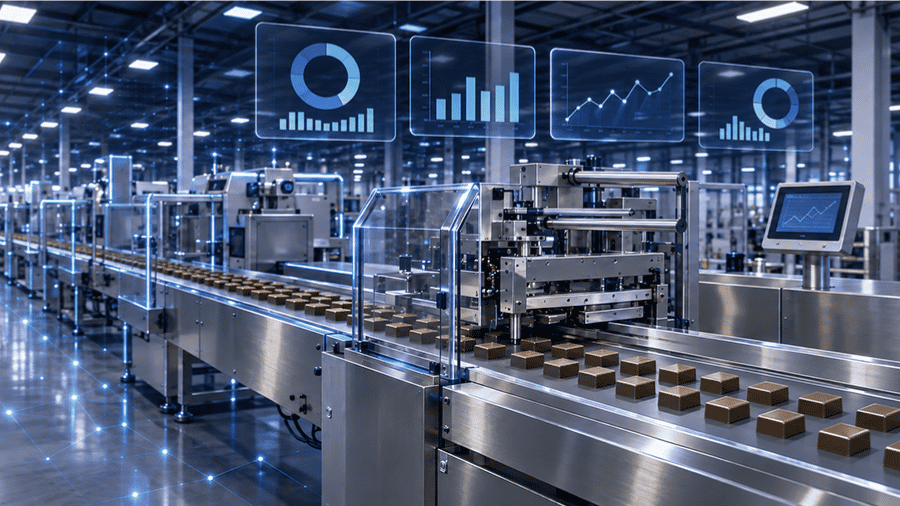
Value growth, product fragmentation, premium formats, new materials, shorter runs, integrated automation and digital visibility are reshaping packaging requirements. Technology may differ by market, product and production goal, but the direction is consistent: manufacturers need to protect more value while keeping complexity under control.
Explore how ACMA supports Food manufacturers with flexible packaging technologies, integrated solutions and lifecycle capabilities.