

At 8,500 biscuits a minute, every manual step is a cost
In high-volume biscuit manufacturing, production speed alone is not enough. As product portfolios expand and market demands evolve, packaging operations must keep pace without compromising efficiency, quality, or flexibility. For a leading bakery group in Central America, handling approximately 8,500 biscuits per minute required a smarter approach to primary packaging, capable of transforming production output into consistent, market-ready packs.
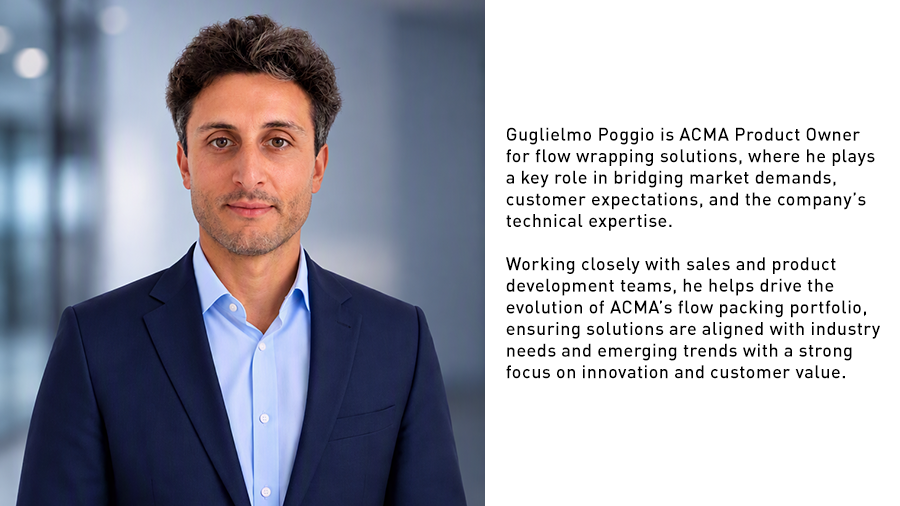
To understand how this challenge was addressed, we spoke with Guglielmo Poggio, ACMA Product Owner, who oversaw the project from the first line audit to the final commissioning.
The challenge: the moment manual feeding reached its limits
Q. Let’s start from the beginning. What was the customer’s real problem?
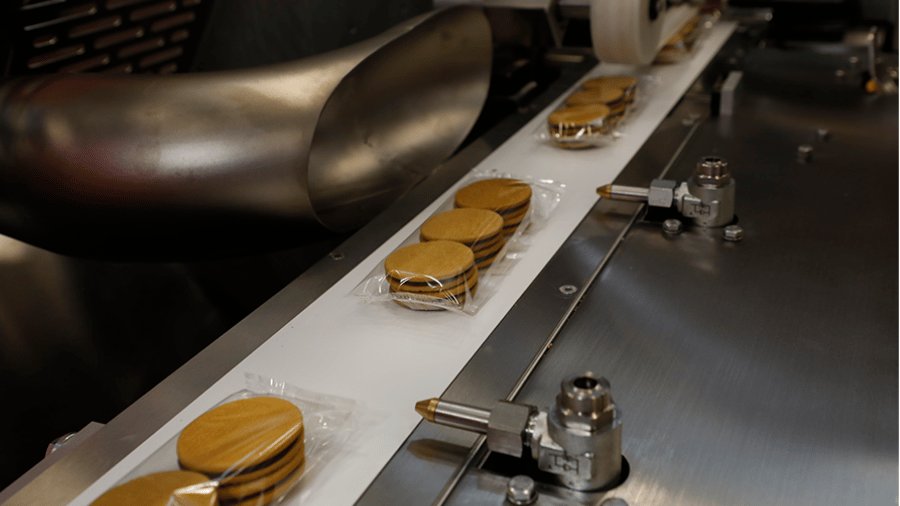
A. Throughput was not the issue — the oven was already delivering around 8,500 biscuits per minute. The issue was what happened next. Product was still being fed manually into wrapping, and at that speed manual intervention means variability, unplanned stops and pack quality you cannot predict.
Q. So the brief was “automate the feeding”?
A. That’s how it usually starts, but it wasn’t the real brief. Volumes were rising and the product range was widening. What the customer actually needed was stability, efficiency and the ability to launch new products without re-engineering the line. That’s a very different design problem.
Q. How did that change your approach?
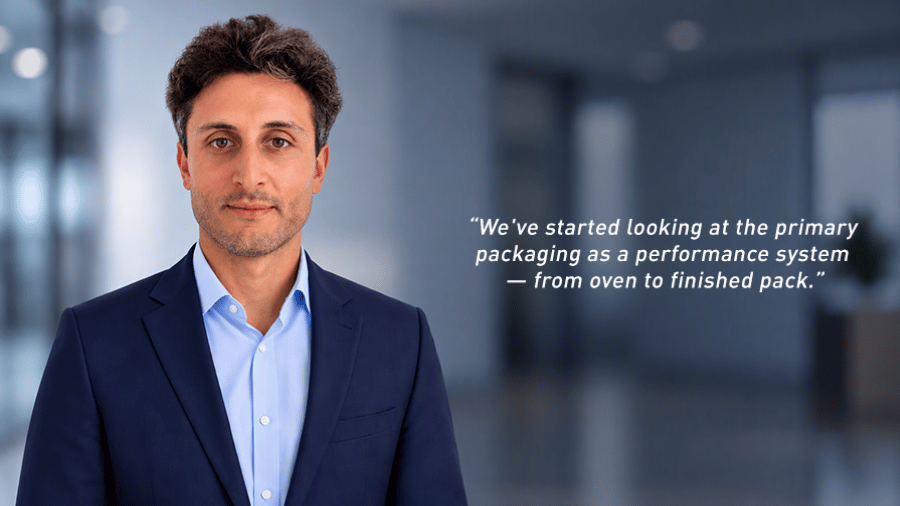
A. We've started looking at the primary packaging as a performance system — from oven to finished pack. Once you frame it that way, the questions change: where does the flow break, who owns the interfaces, what happens when one wrapper micro-stops.
The solution: building a fully synchronized packaging ecosystem
Q. Let’s go through the line. What happens after the oven?
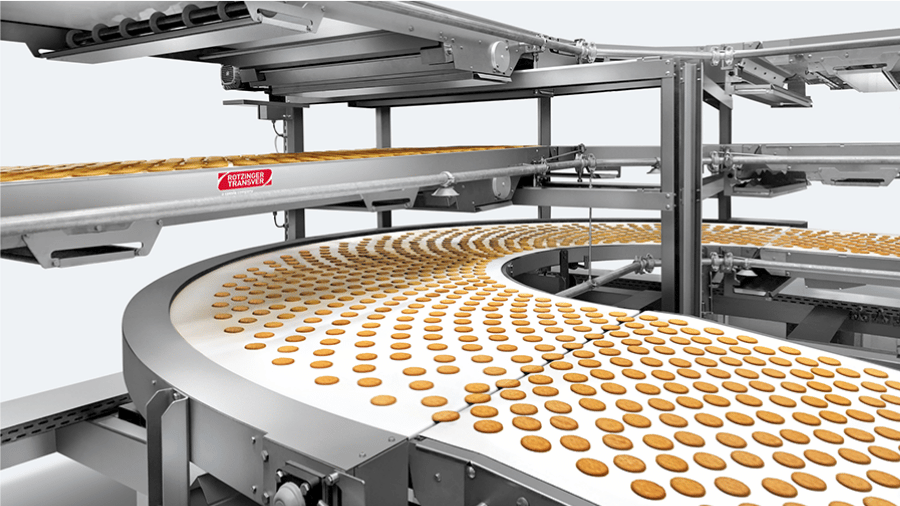
A. Biscuits are received and managed through a Rotzinger Transver flat-belt buffer that distributes and accumulates product. The value is simple: baking is decoupled from packaging. A micro-stop on one wrapper no longer propagates back to the oven.
Q. Three technologies in one line. How was the integration governed?
A. FlexLink acted as system integrator between ACMA and Rotzinger Transver. They engineered the interface between product distribution and wrapping and owned the synchronization of the complete flow. For the customer that means one engineering logic, one commissioning path and clear accountability for line performance — which is exactly what gives you a predictable start-up curve.
Q. Was that a decisive factor?
A. Very much. On a project like this, most of the risk sits in the interfaces, not in the machines. Having a single integration logic across technologies was what turned separate machines into one performing line.
Q. And the transfer into the wrappers?
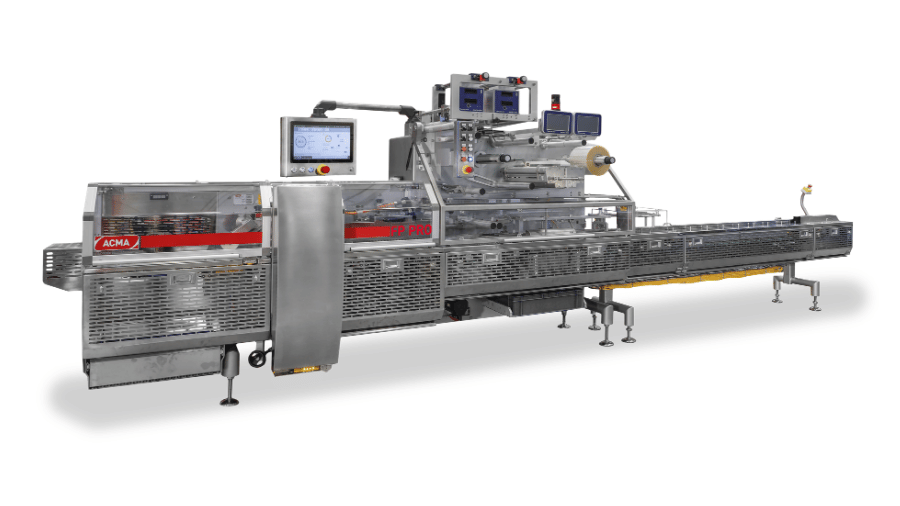
A. Mechanical pick-and-place systems feed the infeed chains of six ACMA flow wrappers running in parallel, up to around 300 packs per minute each. Manual feeding variability is gone, product care is preserved on fragile items, and pack quality is repeatable shift after shift.
Q. You mentioned flexibility. How far does it go?
A. Flat biscuits, cookies with inclusions, round and elongated products — from two or three pieces per pack up to twelve, in single-layer, flat or stacked configurations. Up to 12 primary packaging formats on one line. New formats and promo packs run on the existing asset: shorter time-to-market, protected investment.
The outcome: where efficiency meets flexibility
Q. If you had to summarise the value delivered?
A. One synchronized line that turns throughput into sellable packs with consistent quality, and that scales with the business instead of constraining it. In practice:
- Higher line efficiency: manual feeding removed at 8,500 biscuits per minute
- Predictable quality across all varieties and formats
- Process stability: buffering absorbs fluctuations and protects oven output
- Commercial agility: up to 12 pack formats on one line
- Lower complexity: one integrated line, one performance logic, clear accountability
- Scalability: a future-ready platform for growth
Q. One lesson you take from this project?
A. That the goal was never simply to automate a process. It was to create a packaging ecosystem capable of supporting future growth — and that only works when technology, integration and accountability are designed together.
Facing similar packaging challenges? Let’s talk. Discover how ACMA can turn packaging into measurable efficiency, flexibility and control.